




















































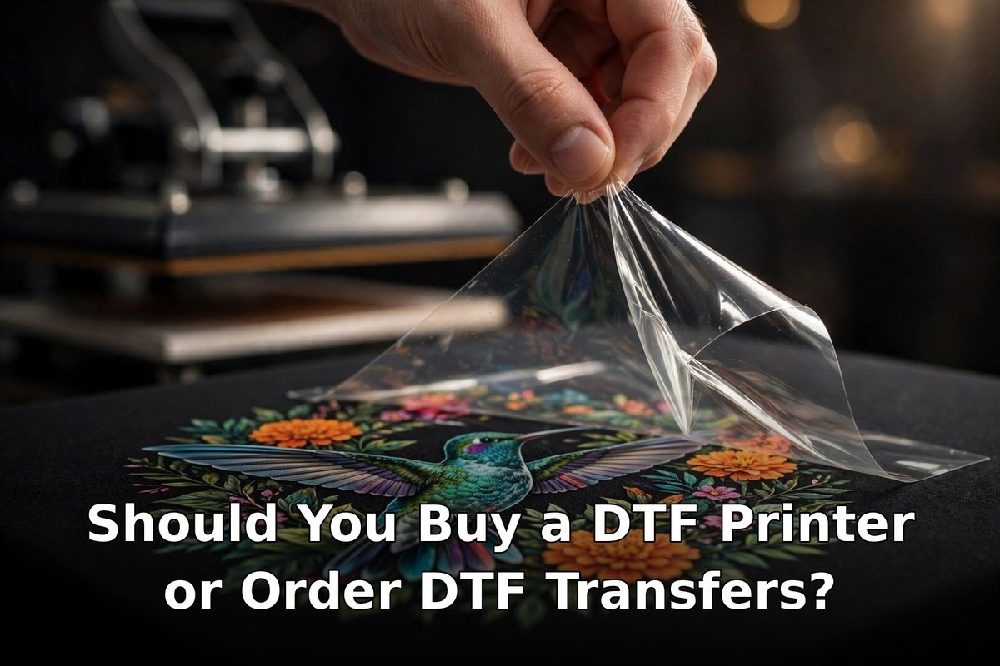
Should You Buy a DTF Printer or Order DTF Transfers?
If you are starting out, or printing in low or inconsistent volume, ordering pre-made DTF transfers is the smarter first move: no large upfront investment, no maintenance, and you still press and sell custom apparel yourself. Buying a DTF printer makes sense when your volume is consistent, you need faster turnaround, and the per-shirt savings outweigh the ongoing costs of ink, film, powder, maintenance, and labor. The right choice depends on your order volume, startup budget, turnaround needs, production control, and growth plans, not on which option sounds more serious.
The Two Paths, Plainly Explained
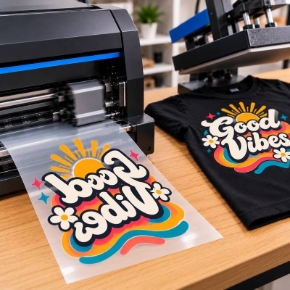
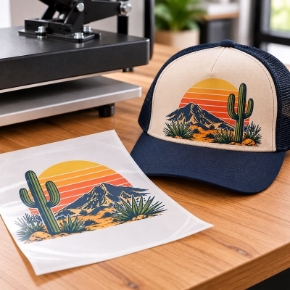
Ordering DTF transfers: You send your artwork to a transfer supplier, they print the transfers and ship them to you, and you heat-press them onto garments yourself. You still produce custom apparel in-house. You simply outsource the transfer-printing step.
Buying a DTF printer: You print the transfers yourself, then press them. You get full control over the whole process, but you also own all of it: the equipment, the consumables, the maintenance, and the learning curve.
Watch our overview of how DTF printing works:
Buy a DTF Printer vs. Order DTF Transfers: Side-by-Side Comparison
| Factor | Order DTF Transfers | Buy a DTF Printer |
|---|---|---|
| Upfront investment | Low: a heat press and your garments | High: the printer, a heat press, and startup consumables |
| Cost per shirt | Fixed per-transfer price, set by your supplier | Ink, film, powder, and labor per print; lower per unit at volume, but never zero |
| Turnaround time | Depends on supplier lead time plus shipping | Print on demand, including same-day and rush jobs |
| Production control | Limited: you work on the supplier's schedule and output | Full: reprints, color tweaks, and last-minute changes on your schedule |
| Maintenance and labor | None beyond pressing | Regular maintenance, printhead care, troubleshooting, and someone to run it |
| Scaling up | Order more transfers; no new equipment needed | Capacity is limited by your machine until you add another |
| Risk | Low: easy to pause or stop ordering | Fixed costs continue whether orders come in or not |
Is It Cheaper to Buy a DTF Printer or Order Transfers?
At low volume, ordering transfers wins, because there is no equipment cost to spread across a small number of shirts. At consistent high volume, in-house printing usually wins, because the per-shirt cost of ink, film, and powder drops below the per-transfer price.
The honest way to compare is a break-even calculation, not a guess:
- Add up your monthly ownership costs: equipment payment or depreciation, ink, film, powder, maintenance and parts, labor, and waste from misprints and test prints.
- Divide that total by the number of shirts you print in a month.
- Compare the result to what you would pay per transfer.
If your in-house cost per shirt is lower than the per-transfer price, owning a printer is cheaper. If it is higher, ordering transfers is cheaper. And remember that "cheaper" includes your time: an hour spent troubleshooting a printer is an hour not spent selling or pressing.
How Many Shirts Do You Need to Print to Justify a DTF Printer?
There is no single number, because it depends on your transfer supplier's pricing, the printer you buy, your consumable costs, and how much labor goes into each job. Run the break-even calculation above with your own numbers instead of trusting a rule of thumb.
That said, these are the signs you are getting close:
- Your volume is consistent month to month, not a few spikes a year.
- What you spend on transfers each month is approaching what owning and running a printer would cost.
- You are turning down rush jobs or losing sales because of supplier lead times.
- You need reprints, color adjustments, or last-minute changes your supplier cannot turn around fast enough.
Can You Start a DTF Business Without Buying a Printer?
Yes. Order transfers, press them onto garments, and sell. That is how many apparel businesses start: it lets you test designs, build customers, and prove demand before committing to equipment. If volume grows to the point where the economics favor in-house production, you can add a printer then, with a customer base already in place. Starting with transfers is not a lesser version of a DTF business. It is the lower-risk way into one.
What Equipment Do You Need to Use Ready-to-Press DTF Transfers?
The essential tool is a heat press, sized for the garments you plan to press. Beyond that, you need the transfers themselves and the garments. Follow your supplier's recommended press settings for time, temperature, and pressure, and press a test garment before running a full order. That is the whole setup: no printer, no ink, no powder, no maintenance schedule.
What Are the Hidden Costs of Owning a DTF Printer?
The printer is only the first cost. The ongoing ones catch new owners off guard:
- Consumables: ink, PET film, and adhesive powder on every job.
- Maintenance: regular printhead care, cleaning, and replacement parts.
- Waste: misprints, test prints, and ink used in cleaning cycles.
- Labor: someone has to run the printer, maintain it, and troubleshoot when output goes wrong.
- Learning curve: color management, print settings, and diagnosing problems take time to learn.
- Space: floor space for the printer, plus storage for film, powder, and finished transfers.
- Downtime: when the printer is down, production stops unless you have a backup plan.
When Does In-House DTF Production Make Sense?
Bringing production in-house makes sense when most of these are true:
- Your order volume is consistent, not seasonal or sporadic.
- You need faster turnaround than a supplier can offer, including same-day or rush jobs.
- You want full control over color, reprints, and last-minute changes.
- The break-even math works with your real numbers, including labor and waste.
- Your growth plans point to more volume, not less.
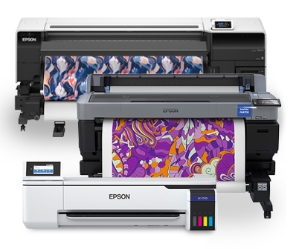
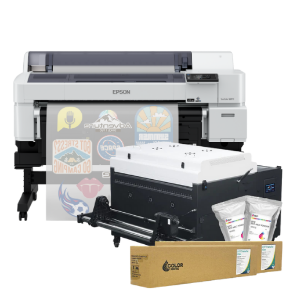
If you are still building volume, ordering transfers keeps your costs variable and your options open. When you are ready to invest, IT Supplies carries DTF printers from the Epson SureColor G6070 up to the production-scale Epson SureColor G9070. For the full picture of the process itself, see our DTF printing explained guide and our DTF applications overview.
The Bottom Line
Buy transfers to minimize upfront investment and production complexity. Consider a printer when consistent volume, faster turnaround, production control, and the economics justify bringing production in-house. Neither choice is permanent: start with transfers, and add a printer when your numbers say it is time.
Talk DTF With Our Team
Still deciding between a printer and transfers? Our specialists can walk through your volume and help you figure out which path fits your business.

Write a comment