








































































UV Printing Guide: How UV Flatbed Printing Works and Choosing the Right Printer
UV printing is a digital printing process that prints directly onto rigid and flexible materials using UV-curable inks that harden instantly under ultraviolet light. Because the ink cures on contact with UV light instead of drying into the material, UV printers can print on wood, acrylic, glass, metal, foam board, and promotional products that conventional inkjet printers cannot handle.
Watch our Epson SureColor V4000 overview below for a walkthrough of a mid-range UV flatbed in action, then read on for how the process works, what it costs to run, and which printers handle which work.
What Is UV Printing?
UV stands for ultraviolet. UV printing uses specially formulated UV-curable inks and ultraviolet lamps, typically LED lamps, to cure the ink the moment it is deposited. The UV light triggers a chemical reaction that turns the liquid ink into a solid layer on the surface of the material. There is no drying time and no ink soaking into the substrate, so finished prints can be handled almost immediately.
UV flatbed printers print directly onto the object itself, which is sometimes called direct-to-substrate or direct-to-object printing. The material stays still on the print bed while the printhead and UV lamps move over it, which is what allows UV flatbeds to print accurately on thick, rigid, or oddly shaped items.
How Does UV Flatbed Printing Work?
A typical UV flatbed workflow follows these steps:
1. Prepare the artwork. The design is processed in RIP software, which manages layout, color, and specialty channels.
2. Jet the ink. The printhead deposits tiny droplets of UV-curable ink onto the material, including CMYK color inks and, where needed, white ink.
3. Cure instantly. UV LED lamps follow the printhead and expose the ink to ultraviolet light, hardening it into a solid layer within seconds.
4. Add effects. White ink can be printed as an underbase on dark or transparent materials, and varnish can be added as a final layer for gloss, matte, or textured effects.
White ink and varnish are what separate UV flatbed printing from ordinary inkjet printing. White ink makes colors pop on dark substrates and makes printing on clear acrylic possible, while varnish adds tactile finishes and protective layers that change how a finished piece looks and feels.
What Can You Print With a UV Flatbed Printer?
UV flatbeds are known for substrate versatility. Common materials include acrylic, wood, glass, metal, foam board, aluminum dibond, PVC boards, and rigid signage substrates, along with promotional products such as phone cases, awards, and personalized gifts.
Typical applications include:
- Retail and point-of-purchase signage
- Outdoor and indoor signs
- Wall art and decor printed on wood or acrylic
- Promotional products and personalized gifts
- Industrial marking and control panels
- Packaging prototypes
One practical note: while UV printers accept a wide range of materials, heat-sensitive substrates and heavily textured surfaces still require testing. Confirm compatibility with your specific material before committing to a production run.
What Are the Benefits of UV Printing?
Instant curing. Prints come off the bed dry and ready to handle, with no drying racks and no waiting.
Durability. Cured UV ink forms a hard layer on the surface of the material, producing scratch-resistant prints suited to signage and handled products.
Material versatility. UV printing works on rigid materials that absorbent inkjet inks cannot, including glass, metal, acrylic, and wood.
White ink and varnish. White ink enables printing on dark and transparent materials, and varnish adds gloss, matte, or textured finishes for premium-looking output.
Short runs and personalization. As a digital process, UV flatbed printing needs no screens or plates, so one-offs, short runs, and variable data are practical.
What Does UV Printing Cost to Run?
The two costs that matter most in UV printing are ink consumption and total cost of ownership. Ink usage depends on coverage, substrate, and how much white ink and varnish a job uses.
Watch our breakdown of real ink usage on the Epson SureColor V7000, where we printed the same files on foam board, aluminum dibond, and acrylic and measured exactly how much ink each job consumed:
The pattern in that video is typical: heavy coverage jobs on premium substrates, especially acrylic with a full white ink underflood, use the most ink. Lighter jobs on foam board cost considerably less per print. If you want us to estimate ink usage for your own files and substrates, call 1-800-771-9665 and we can help you validate the numbers.
What Should You Know Before Buying a UV Flatbed Printer?
Size and footprint. Match the bed size to the work you actually produce. A shop printing promotional products does not need a 4-foot by 8-foot bed, while a sign shop running full sheets will outgrow a desktop unit quickly.
White ink maintenance. White UV ink needs regular attention. Follow the manufacturer's maintenance schedule to protect printheads and keep the white channel printing cleanly.
Workspace and ventilation. UV printers cure ink with ultraviolet light rather than heat, but they are production machines with real space, electrical, and ventilation requirements. Follow the manufacturer's installation and safety guidance for your model.
RIP software and workflow. Plan for the software that drives the printer, including layout, color management, and white ink and varnish channels. A repeatable workflow matters as much as the hardware.
Total cost of ownership. Look past the purchase price. Ink, maintenance, and consumables determine what the printer costs you per year, which is why measuring real ink usage on your own work matters.
Which Epson UV Flatbed Printer Is Right for Your Shop?
Epson's SureColor V-Series covers the full range, from desktop to production. Here is how the lineup breaks down:
Epson SureColor V1070: the desktop entry point. A compact UV flatbed for startups and small shops printing promotional products, signage, and custom items in small spaces.
Epson SureColor V4000: the mid-range flatbed. The V4000 fills the gap between desktop units and full-size production flatbeds. It uses a 10-color UltraChrome UV ink set, including red, white, and varnish, on a 38.5-inch by 27.5-inch bed, and it prints on objects up to 7.8 inches thick. It suits sign shops, personalized product businesses, and custom merchandise producers that need more capability than a desktop printer without the floor space or cost of a 4-foot by 8-foot system. The V4000 is available for demo at our Rolling Meadows, Illinois print showroom.
Epson SureColor V7000: the production flatbed. The V7000 is a full-size 4-foot by 8-foot UV flatbed for sign and display production. It runs the same 10-color UltraChrome UV ink set with red, white, and varnish, holds media up to about 3 inches thick with automatic height adjustment, and includes a multi-zone vacuum system, pin registration for repeatable placement, and a built-in ionizer. It delivers photographic print quality at production speeds, even when printing white ink and varnish, which is why it remains one of the most popular UV flatbeds in its class.
See current pricing on each product page, or call 1-800-771-9665 to talk through which model fits your applications and volume.
Frequently Asked Questions About UV Printing
How does UV printing work?
UV printing deposits UV-curable ink onto a material with an inkjet printhead, then exposes the ink to ultraviolet light, usually from LED lamps. The light triggers a chemical reaction that hardens the ink into a solid layer within seconds, so prints come off the machine dry.
What is the difference between UV printing and regular inkjet printing?
Regular inkjet printing relies on ink drying into or onto the material, which limits it mostly to paper and coated media. UV printing cures ink with light on the surface of the material, so it works on rigid substrates like wood, glass, metal, and acrylic that ordinary inkjet printers cannot handle.
Can UV printers print on dark materials?
Yes. UV flatbed printers use white ink as an underbase beneath the color layers, which makes colors appear correctly on dark, colored, and transparent materials such as black acrylic or clear glass.
What is varnish used for in UV printing?
Varnish is a clear UV-cured layer applied over or selectively across a print. It adds gloss or matte finishes, tactile textures, and an extra layer of protection to the finished piece.
Is UV printing durable?
Yes. Cured UV ink forms a hard, adhered layer on the substrate surface, producing scratch-resistant prints suited to signage, retail displays, and handled products. Durability still depends on the material, ink coverage, and curing, so test your specific application.
Do UV printers need ventilation?
UV printers are production machines with specific installation requirements. Follow the manufacturer's guidance on workspace, ventilation, and safety for your model, and check local requirements for your shop.
How much does a UV flatbed printer cost?
It depends on the size and production class. Desktop UV flatbeds are the most affordable entry point, mid-range flatbeds like the Epson SureColor V4000 sit in the middle, and full-size production flatbeds like the Epson SureColor V7000 are the largest investment. See the current pricing at the top of each product page, or call 1-800-771-9665 for a quote.
Can a UV printer print on curved objects?
Flatbed UV printers are designed for flat and rigid materials, though the Epson SureColor V4000 handles objects up to 7.8 inches thick. Printing on curved items such as bottles typically requires a rotary attachment or a different machine configuration.
Explore UV Flatbed Printers at IT Supplies
If you are evaluating UV printing for the first time or looking to step up from a desktop unit to production equipment, our team can help you compare models for your applications and volume. Browse the Epson SureColor V4000 and the Epson SureColor V7000, or call 1-800-771-9665 to talk with one of our commercial sales specialists.
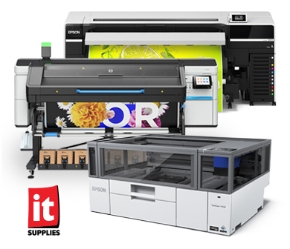
IT Supplies is your one-stop shop for everything you need to achieve the perfect print. We partner with top manufacturers to bring you the best in printing technology, including Eco-Solvent, Latex, UV, and Aqueous printers from EPSON, HP, and Canon. Our lineup also features a wide selection of Dye-Sublimation, DTF, and DTG printers from EPSON and HP. Explore our full range at www.itsupplies.com or by giving us a call at 1-800-771-9665!

Write a comment